 RUN4IT
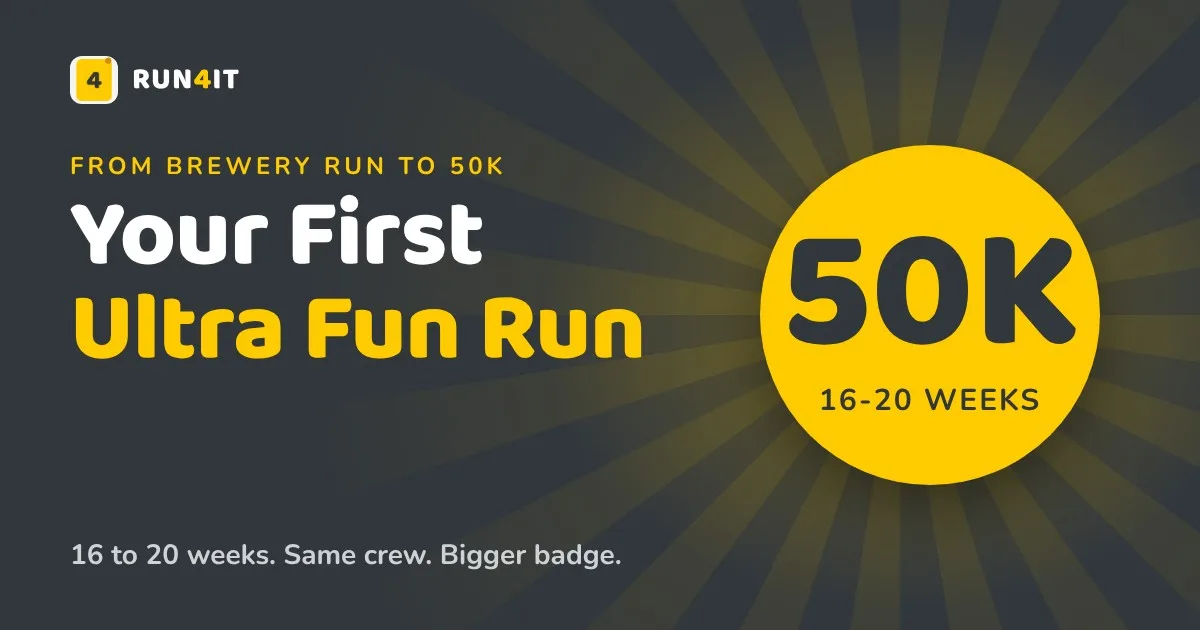
Your First Ultra Fun Run: From Brewery Run to 50K
Key takeaways
- A runner who has covered about 15 to 20 miles a week for eight weeks has a reasonable base to start training for an ultra fun run.
- A 16 to 20-week build centers on a long run on Saturday and a medium-long run on Sunday, with your weekly brewery run left alone.
- Start run-walk intervals, such as 9 minutes running and 1 minute walking, from mile one instead of waiting until you are tired.
- Eat a few hundred calories an hour from early in the race, and drink to thirst instead of waiting for hunger.
- For a first event, look for 30 to 40 miles, generous cutoffs and beginner-friendly terrain.
Yes, you can finish an ultra fun run on a run club base. If you run a 5K brewery run every week, you are closer than you think. The jump takes three changes: raise your weekly mileage gradually, slow your pace way down, and carry fuel instead of counting on the post-run beer at the finish. This guide shows what changes between your usual fun run and race day.
This is a general outline, not coaching. If you have a health condition, talk to your doctor before starting a big training build, and adjust the plan to how your body responds.
What is an ultra fun run?
An ultra fun run is a themed, social event at or beyond the marathon distance of 26.2 miles, run with your crew instead of against a clock. Think brewery run energy stretched over 50K (about 31 miles): costumes, aid station snacks, post-run beers and a finish line party. Many ultras have generous cutoffs for a 50K, so finishing matters more than placing. Check each event's cutoff before you sign up, because they vary widely.
The difference comes down to intent and structure.
| Fun run | Ultra fun run | Race ultra | |
|---|---|---|---|
| Distance | 5K to 10K | Marathon to 50K and beyond | 50K to 100 miles |
| Cutoff | Usually none | Long and forgiving | Often strict |
| Focus | Social | Social plus endurance | Competition |
A standard fun run is a morning out. A race ultra is a competitive event, often with strict cutoffs. The ultra fun run sits between them: real distance, real training, little pressure. It is a good next step for run club runners who have earned their post-run beer and want a bigger badge for it.
Can a casual run club runner finish an ultra?
Yes, if you are honest about your starting point. Many social runners who finish a first ultra already run three or four times a week with their crew, which puts them close to the base they need. Before you sign up, aim for eight or more weeks of comfortably covering 15 to 20 miles a week, including one longer run. If your longest recent run is a 10K turkey trot, build that long run up gradually instead of jumping to race distance.
What your run club already taught you. Group run habits transfer better than most new ultra runners expect. You already know how to run at a conversational pace, how to keep showing up when motivation dips, and how a post-run beer turns a workout into a habit you protect. Those skills carry you through hour six of an ultra, where pacing and consistency matter far more than speed.
How do you pick your first ultra fun run?
Score the event on four things: terrain, cutoff times, vibe and distance, with distance last. If your longest run is a 10K, pick something in the 30 to 40 mile range with a generous cutoff, not a 50-miler with a 12-hour cap. Terrain matters more than miles. A flat rail trail ultra is a different animal from a mountain course.
Read the race page like a captain. Look for the cutoff time first, then aid station spacing, then the vibe words: "costumes," "post-race party," "beginner friendly." A themed social event works well for a first ultra because your crew can pace loops with you, and the post-run beer is part of the finish line.
Start a streak that carries you there. Pick your event, count back 16 to 20 weeks and start logging now. Download Run4It for iPhone or get it on Android and log your first long run this weekend.
How should your training change from fun run to ultra?
You stop training for pace and start training for time on your feet. Your weekly brewery run stays where it is. Everything else bends around one goal: teaching your legs to keep moving for four, five or six hours without caring how fast.
The 16 to 20-week build, week by week
Work backward from race day. The table below shows the 16-week version. If you have more time, or your body wants it, repeat weeks 5 to 10 for up to four extra weeks before the peak. Extra time at a comfortable long run beats rushing the build.
| Weeks | Focus | What to log |
|---|---|---|
| 1 to 4 | Keep your routine and stretch one weekend run by about 15 minutes each week | Every run, to start the streak |
| 5 to 10 | Grow the weekend run to 2.5 to 3 hours and add a second medium run the day before | Both weekend runs, plus the brewery run |
| 11 to 13 | Peak weeks, with your longest back-to-back weekend | The long runs and how they felt |
| 14 to 15 | Taper: cut volume roughly in half and keep a little speed | Easy runs only |
| 16 | Race week | The race |
The mistake most fun run runners make is chasing a pace target on long runs. An ultra rewards the opposite. If your crew drops you on a 3-hour shuffle, you went out too hard. Slow down until you could hold a conversation about the beer mile. Walking the hills is not cheating. It is the actual skill.
Back-to-back long runs explained
Run long on Saturday, then run medium-long on Sunday, tired. A 3-hour Saturday followed by a 90-minute Sunday teaches your body to start a run already fatigued, which is what mile 25 of your first ultra fun run feels like. You get the endurance lesson without the recovery cost of one giant 5-hour day. Keep the Sunday effort easy.
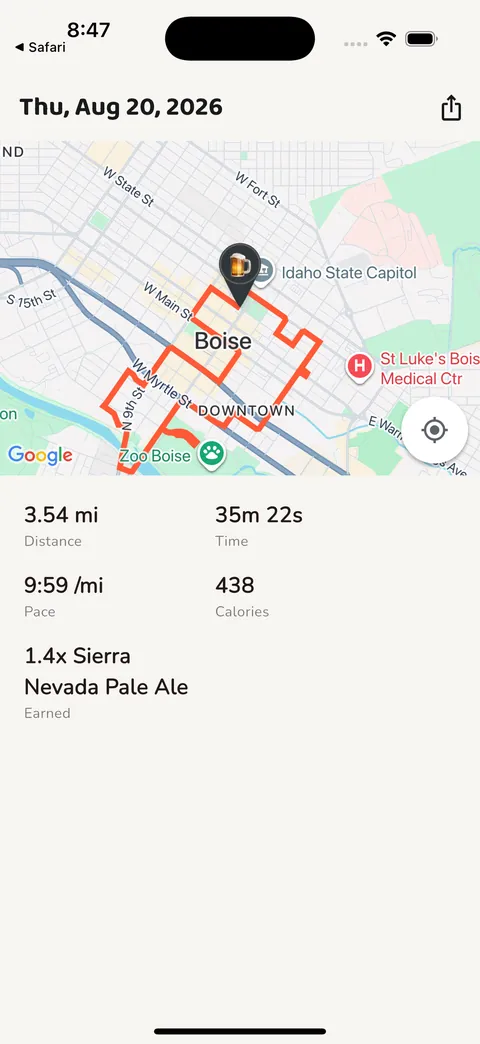
Log both days. Run4It counts a logged run or workout toward your streak, so a back-to-back weekend keeps it climbing, and the drink each run earned shows up in the app.
What about pacing and fueling when the distance doubles?
Beer mile pace and 5K pace both fail at ultra distance for the same reason: neither teaches you to run slow. Even a fast beer mile is a few minutes of all-out effort, and a 5K brewery run is 25 to 30 minutes of honest pushing. Your first ultra fun run might take five hours or more, and the only pace that survives that is one you can hold while chatting with your crew.
Run-walk intervals for social runners. Start run-walking from mile one, not when you break. A simple pattern is to run 9 minutes, walk 1 minute and repeat. Walking the ups and jogging the flats keeps your legs fresh and your sense of humor intact. If you can hold a conversation at every interval, you picked the right pace.
Aid station strategy. Eat early and often, before hunger shows up. Aim for a few hundred calories an hour from whatever sits well: gels, potato chips, orange slices. Drink to thirst, alternate water and electrolyte mix, and give your stomach a minute at each stop before moving on. Save the beer for the finish. Alcohol and a long effort do not mix well.
Shoes. You will be on your feet for hours, so shoes with more cushion and grip matter. Break them in on your long runs, not on race day.
What gear actually changes for an ultra fun run?
Most of your run club kit carries over. The short list that changes:
- Trail-ready shoes with room in the toe box
- Wool or synthetic socks, with a spare pair
- A hydration vest or handheld bottle
- A headlamp if the event starts early or runs past dark
- A drop bag
Do you need a vest? If the course has aid stations every few miles, you can start with a handheld bottle and a pocket. A vest earns its place once you are out three hours or more and carrying gels, a flask and a layer. Test whatever you pick on long training runs first, never on race day.
Crew and drop bags. A drop bag is a duffel you hand off at a checkpoint: fresh socks, more gels, a shirt for night. Your crew can be the same crew that meets you at the finish line beer. Skip anything you have not run in, including trekking poles and fancy new vests.
How do you keep the crew and the streak alive through training?
A multi-month build is where fun run runners quit, not on race day. The fix is social pressure plus a small reward you can see. Streaks, badges and weekly challenges give your crew a shared scoreboard between group runs.
Set a weekly challenge your whole crew joins: hit your long run distance, post a photo from the brewery, keep the streak alive. Run4It turns your training miles into drinks you have earned, so every long run counts toward the streak and the post-run beer you are working toward.
Where Run4It fits, and where it does not. Run4It rewards miles and streaks. It does not write your training plan. Pair it with a plan from a coach or your club schedule, and let the app handle the "you earned it" part. The earned drink is a motivational count, not a purchase, and the app does not sell or redeem drinks.
Download Run4It for iPhone or get it on Android, and start your training streak with this weekend's run.
What happens on race day, start to finish line?
Check-in is usually 30 to 45 minutes before the start. Pin your bib, fill your bottles and find your crew. Your first 10 miles should feel insultingly slow. If you run your fun runs at a 9-minute pace, expect to jog 12 to 13 minutes per mile here. Run the early miles with a conversation going. If you cannot talk, you are going too fast.
Getting through the low points. Somewhere past halfway you will hit the dark miles: tired legs, a bad attitude and the urge to quit at the next aid station. Plan for it. Eat before you are hungry, walk the climbs and give yourself small targets, like the next aid station, instead of the finish line.
If your crew shows up to pace you or hand you a fresh bottle, let them. When you cross the line, the post-run beer is the one you earned most. Log it, keep the streak alive and start looking for the next one.
FAQ
How many miles a week do I need before attempting an ultra fun run?
Aim for eight or more weeks of comfortably covering 15 to 20 miles a week, including one longer run. If you already run three or four times a week with your crew, you are close. If your longest recent effort is a 10K, stretch your weekend run gradually.
Do I have to give up my weekly brewery run while training?
No. The build happens around it. One weekend run grows by about 15 minutes at a time until it reaches 2.5 to 3 hours, then a second medium run joins the day before. The social run is the habit that keeps everything else standing.
Is walking during an ultra fun run cheating?
No. Walking is the actual skill. Run-walk intervals like 9 minutes running and 1 minute walking, started from mile one, keep your legs fresh for hours. Walking the hills and jogging the flats is a legitimate strategy, not a fallback for when things fall apart.
What should I eat during a five-hour ultra?
Eat early and often, before hunger arrives. Aim for a few hundred calories an hour from whatever sits well: gels, potato chips or orange slices. Drink to thirst, alternate water with electrolyte mix and take a minute at each aid station.
Can my run club crew be my race crew?
Yes, and they probably should be. The same crew that meets you at the finish line beer can hand you bottles, pace loops and talk you through the dark miles.
FINISHED! ULTRA STYLE. Run for it. You earned it.
Run4It is for adults 21 and over. Please drink responsibly and never drink and drive. Run4It is an independent app and is not affiliated with or endorsed by any race, brewery or brand mentioned. This guide is general information, not medical or coaching advice.